What Are the Top Frequency VFD Types in 2026?
Choosing a Frequency Vfd in 2026 is no longer a simple horsepower decision. Engineers now compare control accuracy, motor compatibility, energy savings, network security, maintenance access, and total operating cost. A compact pump may need only scalar V/f control. A crane, extruder, or high-inertia conveyor usually demands stronger torque management.
The leading types include V/f drives, sensorless vector drives, closed-loop vector drives, direct torque control drives, regenerative drives, and medium-voltage VFDs. Each design solves a different problem. V/f control remains affordable and reliable for fans and pumps. Sensorless vector control offers better low-speed torque without an encoder. Closed-loop vector control adds feedback for precise speed and position. Regenerative models return braking energy instead of wasting it as heat. That detail matters in elevators and test benches.
Dr. Peter Vas, a respected motor-drive researcher, stated, “Vector control separates torque-producing current from flux-producing current.” This principle still explains why vector drives perform better under changing loads. Yet no ranking is universal. It would be careless to call one type the best without checking the motor, cable length, load profile, ambient temperature, and required braking cycle.
Real installations expose the gaps. A drive may run smoothly in a test room but trip beside a dusty compressor. Poor grounding can create noise. Long motor cables can stress insulation. Harmonic distortion may also affect sensitive equipment. This guide examines the top Frequency Vfd types for 2026, using practical selection criteria, current engineering practice, and manufacturer documentation. Some conclusions remain imperfect. Field conditions often challenge the cleanest specification sheet.
What Is a Frequency VFD and How Does It Work?
A frequency VFD, commonly called a variable frequency drive, controls an AC motor’s speed. It changes incoming electrical power into a controlled output. The drive usually rectifies AC into DC. A capacitor smooths the DC link. An inverter then rebuilds AC with adjustable frequency and voltage. Lower frequency generally means slower motor rotation. Higher frequency usually increases speed within the motor’s limits. This process reduces starting current and mechanical shock. In a pump room, the motor can ramp up gently instead of starting with a harsh jolt.
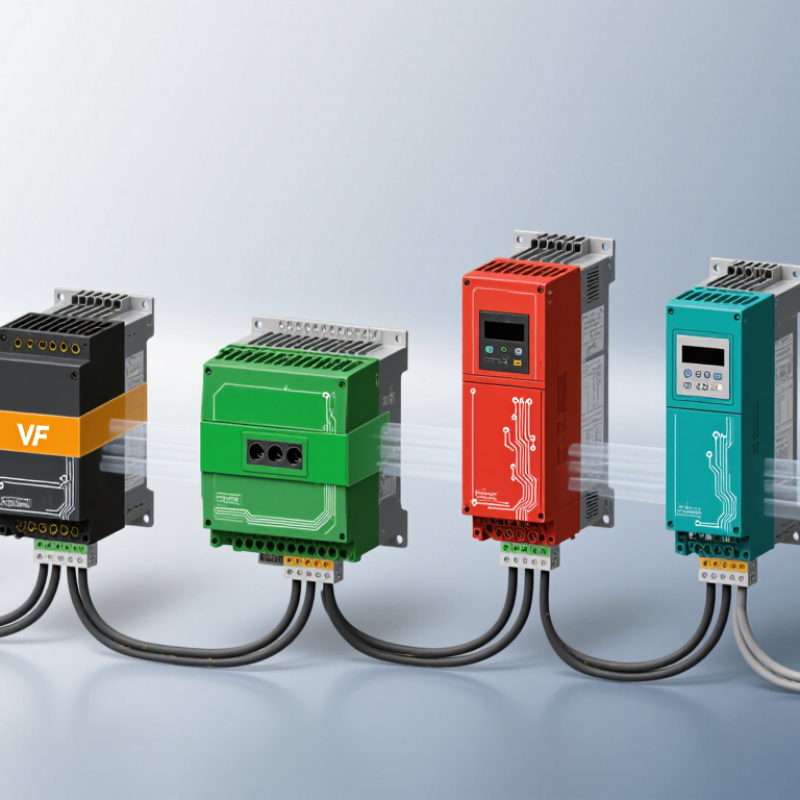
The main VFD types in 2026 include voltage-source drives, current-source drives, and low-voltage or medium-voltage designs. Voltage-source drives suit many fans, pumps, conveyors, and compressors. Current-source drives serve high-power systems where strong current control matters. Low-voltage units support ordinary industrial motors. Medium-voltage units handle larger equipment and require stricter installation practices. Sensorless vector control estimates motor behavior without a shaft encoder. Closed-loop vector control adds feedback for better torque accuracy. Direct-torque methods respond quickly, but tuning can be demanding.
Selection should begin with the motor nameplate, load pattern, required torque, and supply voltage. Do not size a drive only by horsepower. A conveyor may need heavy starting torque, while a fan usually follows a gentler load curve. Check braking energy, enclosure rating, cooling, cable length, and electromagnetic noise. A technically correct selection can still perform poorly in a hot, crowded cabinet. That mistake is common. Harmonic distortion also deserves measurement, not guesswork. Drive manuals and local electrical codes remain essential, because real sites rarely match laboratory conditions.
Which Frequency VFD Types Are Most Common in 2026?
In 2026, low-voltage AC variable frequency drives remain the most common VFD type. They serve pumps, fans, compressors, conveyors, and machine tools. Grand View Research estimates the global VFD market could reach about USD 31 billion by 2030, with AC drives leading practical industrial demand. Their appeal is clear: compact cabinets, broad motor compatibility, and relatively simple commissioning.
Sensorless vector drives are increasingly common where torque matters. They improve low-speed control for conveyors and mixers without requiring an encoder. Scalar, or V/f, drives still dominate simpler fan and pump applications. They cost less and usually meet steady-load requirements. Medium-voltage drives occupy a smaller but important segment, especially in large water plants, mines, and process facilities. MarketsandMarkets projects the VFD market to grow from roughly USD 23 billion in 2023 to more than USD 30 billion by 2028. Report classifications differ, however. Some group drives by voltage, while others measure control technology, so market comparisons are imperfect. Field experience also shows a practical gap: advanced vector control cannot repair poor motor sizing, weak ventilation, or incorrect acceleration settings. Fresh data from 2026 may shift the ranking, particularly as energy-efficiency rules influence retrofit decisions.
What Features Define Modern High-Performance VFDs?
In 2026, common VFD types include low-voltage, medium-voltage, regenerative, and sensorless vector drives. Each serves a different operating environment. Modern high-performance VFDs are defined less by labels and more by measurable control quality. Sensorless vector control can maintain torque during speed changes without an encoder. Regenerative models return braking energy to the electrical system. That matters on cranes, elevators, and downhill conveyors.
Fast processors now improve speed response and reduce motor stress. Precise current sensing helps the drive detect overloads, phase loss, and abnormal heating. Built-in protection is essential. A clear keypad also matters when technicians troubleshoot a panel beside a noisy machine. Useful displays show output frequency, motor current, temperature, fault history, and operating hours. Small details save time.
Efficiency is another defining feature. Advanced VFDs adjust motor output to match real load demand, especially in pumps and fans. Harmonic mitigation can reduce distortion in sensitive facilities. Communication support allows connection with industrial control systems and energy monitoring tools. Cybersecurity features should include role-based access and secure firmware updates. Still, no drive is perfect. Cable length, grounding, motor insulation, and incorrect parameter settings can undermine excellent hardware. I have seen commissioning delays caused by one forgotten acceleration setting. Engineers should verify protection limits, cooling conditions, and motor data during startup. A practical test under real load often reveals more than a brochure.
How Should You Choose the Right Frequency VFD Type?
Choosing the right frequency VFD type starts with the motor’s real workload, not its nameplate alone. Record rated power, voltage, current, speed range, starting torque, and daily operating hours. A pump may work well with a basic V/f drive, while a conveyor carrying uneven loads often needs sensorless vector control. For precise speed at very low rpm, closed-loop vector control can provide stronger torque and steadier feedback.
Match the drive to the application’s physical behavior. Fans and centrifugal pumps usually need smooth acceleration and energy-saving control. Hoists, mixers, and extruders demand rapid torque response and careful braking management. Check the motor’s insulation, cable length, enclosure rating, ambient temperature, and available cabinet space. A dusty workshop may require better cooling protection than a clean production room. Small details matter.
Do not choose by output power alone. Compare overload capacity, harmonic performance, control inputs, communication options, and service access. Test the motor under its heaviest expected load, not only during an empty trial. It may pass the first test.
In many installations, engineers select a drive that is too powerful, then overlook wiring, grounding, or parameter tuning. That is an expensive lesson. Review the manufacturer’s technical data and involve a qualified technician before commissioning. The best VFD type is the one that fits the load profile, control accuracy, environment, and maintenance skills available on site.